Author name: schcom_uo1ppv

= DE Kommunikation

Rückerinnerung an das Jubiläum der digitalen Missionare: “Ihr seid hier, weil etwas in euch brennt.”

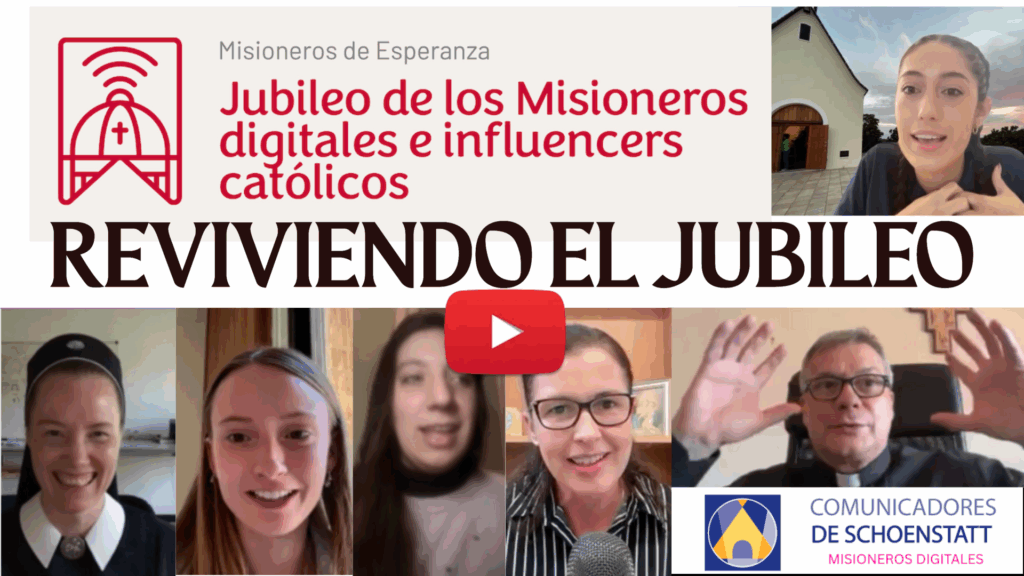
EN ES PT Schau dir das Video an: Digitale Missionare und katholische Influencer treffen sich mit Monsignore Lucio Ruiz, um ihre Jubiläumserfahrungen auszutauschen. Nach mehreren Webinaren mit Monsignore Lucio Ruiz, dem Sekretär des vatikanischen Dikasteriums für Kommunikation, um die Teilnahme digitaler Evangelisten am Jubiläum in Rom (28. und 29. Juli 2025) zu fördern, organisierten die Schoenstatt-Kommunikatoren und digitalen Missionare ein Treffen, um die Erfahrungen bei diesem Ereigniss zu sammeln. Zeugnis von Monsignore Lucio RuizMonsignore Lucio Ruiz fasste in einem Statement die wichtigsten Punkte des Treffens zusammen. Zuerst erklärte er die beiden Hauptziele des Jubiläums. “Das erste”, bemerkte er, “war, dass diejenigen, die auf Instagram, YouTube, TikTok, Podcasts, Blogs, WhatsApp und anderen sozialen Medien arbeiten, das Gefühl haben sollen, dass sie nicht allein sind, dass die Kirche sie als lebendigen Teil ihrer Mission anerkennt.” Das zweite Ziel war, fügte er hinzu, “dass die universelle Kirche eine Möglichkeit hat, durch die sie die digitale Evangelisierung als ein wirklich neues Kapitel in der Geschichte der Mission der Kirche tiefer entdecken kann.” Sechs Schlüsselwerte des JubiläumsMonsignore Ruiz hob dann wichtige Zitate von verschiedenen Rednern hervor, die aus dem Blickwinkel von sechs Werten präsentiert wurden, die in irgendeiner Weise das gesamte Ereignis prägten. Diese Werte wurden durch reflektiert. Wir geben sie hier wieder: GemeinschaftIn den Worten von Kardinal Parolin: “Der digitale Raum ist nicht nur ein Tool, sondern ein Umfeld, das unsere Gedanken, Gefühle und Beziehungen zueinander prägt. Mission kann nicht auf Techniken reduziert werden; sie muss eine lebendige Präsenz der Kirche sein.” Paolo Ruffini, Präfekt des Dikasteriums für Kommunikation, sagte: “Die Kirche war schon immer ein Netzwerk. Das wahre Netzwerk, das uns verbindet, kommt von Gott und von der Taufe. Gemeinschaft wird nicht in Followern oder Statistiken gemessen, sondern im Geheimnis, Teil desselben Leibes zu sein, dessen Haupt Christus ist.” Er fuhr fort: “In einer digitalen Welt, die von Wettbewerb und der Logik der Viralität geprägt ist, sind wir eingeladen, eine Gemeinschaft zu sein, die virtuelle Plattformen in Orte der Begegnung verwandelt.” Ausbildung Paolo Ruffini sprach von „authentischen Medien und digitaler Kompetenz“ und merkte an, dass „es notwendig ist, Spiritualität zu entwickeln, um aus dem Herzen des Evangeliums heraus zu kommunizieren, nicht aus der Logik des Marketings.“ Pater David McCallum lud uns ein, „Entwicklung durch Kontemplation und Scharfsinn zu leben“. Monsignore Ruiz erklärte: „Er hat uns dazu gebracht, innezuhalten, in unser Herz zu schauen und uns zu fragen, was uns bewegt und ob wir es richtig machen.“ McCallum sagte dazu: „Die Ausbildung eines digitalen Missionars besteht nicht nur darin, den Umgang mit Tools zu erlernen, sondern auch darin, eine glaubende Sichtweise auf die Wirklichkeit zu entwickeln.“ ZeugnisErzbischof Rino Fisichella paraphrasierte die Worte von Paul VI.: “Die Welt hört heute nicht auf Influencer; sie hört auf Zeugen. Und wenn sie auf Influencer hört, dann deshalb, weil sie Zeugen sind.” Pater Antonio Spadaro, der Monsignore Ruiz zitiert, bestätigte: “Ihr seid nicht hier, um eine katholische Kommunikationsstrategie zu erhalten. Ihr seid hier, weil etwas in euch brennt. Es reicht nicht, Inhalte zu schaffen. Was überzeugt, ist die Kohärenz zwischen dem Leben und dem, was verkündet wird.” Er fuhr fort mit einer Frage: “Kommen meine Beiträge aus dem Feuer des Evangeliums oder aus der Angst, nicht gesehen zu werden?” EinheitZum Thema Einheit betonte Monsignore Ruiz: “Inmitten der Polarisierung ist Einheit eine Voraussetzung für Glaubwürdigkeit.” Er erklärte: “Wir können eine Diskussion gewinnen, aber wenn wir die Kommunio brechen, verliert das Evangelium.” Er wies darauf hin, dass “das Subjekt der Evangelisierung nicht jeder Einzelne in der Kirche ist, sondern die Kirche selbst” und unterstrich die Bedeutung der Einheit mit der Kirche, den Priestern, den lokalen Gemeinschaften sowie mit anderen Influencern und Missionaren. SynodalitätMonsignore Ruiz zitierte Kim Daniels und sagte: “Digitale Räume fördern die Synodalität, weil sie den Stimmlosen Gehör verschaffen und gemeinsame Verantwortung fördern.” Kardinal Luis Tagle erinnerte uns daran, dass “die Kirche durch Anziehung wächst, nicht durch Zwang” und dass “die digitale Welt ein fruchtbarer Boden sein kann, um diese Anziehung Jesu zu zeigen, solange sie in einem Geist des Zuhörens und des Dialogs gelebt wird.” GeschwisterlichkeitMonsignore Ruiz zitierte Pater Spadaro und betonte: “Ihr seid keine Marke, ihr seid ein Segen. Schafft keinen Fanclub, sondern schafft Geschwisterlichkeit.” Er fuhr fort: “Dieser Satz drückt aus, was viele von uns empfinden: Die digitale Mission kann nicht auf Kennzahlen reduziert werden, sie muss wahre Beziehungen verkörpern.” Kardinal Michael Czerny bemerkte: “Es geht nicht nur um virtuelle Geschwisterlichkeit, sondern um eine Geschwisterlichkeit, die auch die Ausgestoßenen umfasst. Tatsächlich vor allem die Ausgestoßenen.” Bischof Luis de San Martín betonte: “Die digitale Mission ist nur authentisch, wenn sie uns hilft, in Gemeinschaft mit der ganzen Kirche zu leben.” Exhortationen von Papst LeoMonsignore Ruiz schloss seine Zusammenfassung des Jubiläums der digitalen Missionare mit Beiträgen von Papst Leo und sagte: “Er hat uns drei Exhortationen geschenkt, die ein Lebensprogramm für jeden von uns sind.” Die erste Exhortation des Papstes, erklärte Monsignore Ruiz, war: “Sucht den leidenden Christus in jedem Bruder und jeder Schwester.” Er fuhr fort: “Es geht nicht nur darum, Inhalte zu erzeugen, sondern Herzen zu finden.” Für Ruiz ändern diese Worte “unsere Perspektive völlig, weil wir oft die digitale Welt als Produktion sehen, aber der Papst erinnerte uns daran, dass die Maßstäbe nicht die Algorithmen sind, sondern die konkreten Gesichter, die realen Menschen hinter den Bildschirmen”, und schloss mit den Worten von Papst Leo: “Die digitale Mission hat nur dann einen Sinn, wenn sie uns dazu führt, diese Wunden zu berühren.” Die zweite starke Idee des Papstes, wie Ruiz klarstellte, war: “Geht und repariert die Netze”, und er fügte hinzu, dass wir dazu berufen sind, das zu reparieren, was im sozialen und digitalen Gewebe zerbrochen ist. Zitat des Papstes: “Eure Mission ist es nicht, diese Risse zu erweitern, sondern sie zu reparieren.” Die dritte wichtige Idee von Papst Leo, wie Ruiz bemerkte, ist “sich geliebt zu fühlen und dankbar zu sein.” Er fuhr fort: “Der Papst dankte den Influencern für alles, was sie auf digitalen Plattformen tun, als wollte er sagen: Wir sehen, was ihr tut, wir wissen, was ihr gebt, wir erkennen und

= EN Communication

Reliving the Jubilee of Digital Missionaries: “You are here because something burns inside you.”

ES PT DE Watch the video: Digital missionaries and Catholic influencers meet with Msgr. Lucio Ruiz to share their Jubilee experiences  After offering several webinars with Msgr. Lucio Ruiz, secretary of the Vatican Dicastery for Communication, to encourage the participation of digital evangelizers in the Jubilee in Rome (July 28-29, 2025), Schoenstatt Communicators and Digital Missionaries organized a gathering to collect the experiences of this event. Testimony from Msgr. Lucio Ruiz Msgr. Lucio Ruiz delivered a talk summarizing the main points of the international gathering. He began by explaining what the two key objectives of the Jubilee were. “The first”, he noted, “was for those working on Instagram, YouTube, TikTok, podcasts, blogs, WhatsApp, evangelizing on social media, to feel they are not alone, that the Church recognizes them as a living part of its mission.” The second objective was, he added, “for the universal Church to have a point through which to discover the digital mission more deeply as a truly new chapter in the Church’s missionary history.” Six Key Values of the JubileeMsgr. Ruiz then highlighted key phrases from various speakers, presented through the lens of six values that had, in one way or another, marked the entire event: 1. Communion In the words of Cardinal Parolin: “The digital space is not just a tool, but an environment that shapes how we think, feel, and relate to each other. Mission cannot be reduced to techniques; it must be a living presence of the Church.” Paolo Ruffini, Prefect of the Dicastery for Communication, said, “The Church has always been a network, the true network that unites us comes from God and from baptism. Communion is not measured in followers nor statistics, but in the mystery of being part of the same body, whose head is Christ.” He continued, “In a digital world marked by competition and the logic of going viral, we are invited to be a community that transforms virtual platforms into places of encounter.” 2. Formation Paolo Ruffini spoke of “authentic media and digital literacy,” noting that “it is necessary to form spirituality in order to communicate from the heart of the Gospel, not from the logic of marketing.” Father David McCallum invited digital missionaries “to live formation from contemplation and discernment.” Mons. Ruiz explained that “he made us silence ourselves, look inside our hearts, to ask what moves us, and whether we are doing it well.” In Fr. McCallum’s words, “the formation of a digital missionary is not just about learning to use tools, but about cultivating a perspective on reality based on faith.” 3. Testimony Msgr. Rino Fisichella paraphrased words of Paul VI: “The world today does not listen to influencers; it listens to witnesses. And if they listen to influencers, it’s because they are witnesses.”Father Antonio Spadaro, quotes Msgr. Ruiz, affirmed, “you are not here to receive a Catholic communication strategy. You are here because something burns inside of you. It’s not enough to create content. What is convincing is the coherence between life and what is proclaimed.” He continued with a question: “Do my contributions come from the fire of the Gospel or from the fear of not being seen?” 4. Unity On the challenge of unity, Msgr. Ruiz emphasized, “In the midst of polarization, unity is the condition for credibility.” He explained, “we may win a discussion, but if we break communion, the one who loses is the Gospel.” He pointed out that “the subject of evangelization is not each individual in the Church, but the Church itself,” stressing the importance of being in unity with the Church, the pastors, the local communities, and fellow influencers and missionaries. 5. Synodality Quoting Kim Daniels, Msgr. Ruiz said, “Digital spaces foster synodality because they allow the voiceless to be heard and promote shared responsibility.” Cardinal Luis Tagle reminded the listeners that “the Church grows by attraction, not by imposition,” and that “the digital world can be a fertile ground to show that attraction of Jesus, as long as it is lived in a spirit of listening and dialogue.” 6. Fraternity Quoting Father Spadaro, Msgr. Ruiz emphasized, “You are not a brand, you are a blessing. Do not create a fan club; create fraternity.” Msgr. Ruiz continued, “this phrase expresses what many of us feel: digital mission cannot be reduced to metrics, it has to embody true relationships.” At the same time, Cardinal Michael Czerny remarked, “It’s not just about virtual fraternity, but a fraternity that includes the discarded. In fact, especially the discarded.” Msgr. Luis de San Martín emphasized, “The digital mission is only authentic when it helps us live in communion with the whole Church.” Exhortations from Pope Leo Msgr. Ruiz closed his summary of the Jubilee of Digital Missionaries with contributions from Pope Leo, noting that “he gifted us three exhortations that are a program of life for each of us.” The first exhortation from the Pope, explained Msgr. Ruiz, was to “seek the suffering flesh of Christ in each brother and sister.” He continued, “It’s not just about generating content, but about finding hearts.” For Ruiz, “these words completely change our perspective, because many times we think about digital realm as production, but the Pope reminded us that the measure is not the algorithms, but the concrete faces, the real people behind the screens,” and, in Pope Leo’s words, “The digital mission only makes sense if it leads us to touch those wounds.” The second powerful idea from the Pope, as Ruiz shared, was: “Go to repair the nets,” and he added that we are called to mend what has been broken in the social and digital fabric. Quoting the Pope, he said, “Your mission is not to feed those cracks, but to repair them.” The third key idea from Pope Leo, as Ruiz noted, is “to feel loved and be grateful.” He continued: “The Pope thanked influencers for all they do on digital platforms, as if saying: We see what you do, we know what you give, we recognize and

= PT Comunicação, Uncategorized

Revivendo o Jubileu dos Missionários Digitais: “Vocês estão aqui porque algo arde dentro de vocês”

ES EN DE Assista ao vídeo: Missionários digitais e influenciadores católicos se encontram com Mons. Lucio Ruiz para compartilhar as vivências do seu jubileu  Após oferecer diversos webinars com Mons. Lucio Ruiz, Secretário do Dicastério para a Comunicação do Vaticano, para incentivar a participação dos evangelizadores digitais no Jubileu em Roma (28 e 29 de julho de 2025), os Comunicadores e Missionários Digitais de Schoenstatt organizaram um encontro para recolher as experiências deste evento. Testemunho de Mons. Lucio Ruiz Mons. Lucio Ruiz fez uma apresentação resumindo os pontos principais do encontro. Primeiro, explicou os dois objetivos principais do Jubileu. “O primeiro,” observou, “era que aqueles que trabalham no Instagram, YouTube, TikTok, podcasts, blogs, WhatsApp e outros, evangelizando nas redes sociais, sentissem que não estão sozinhos, que a Igreja os reconhece como parte viva de sua missão.” O segundo objetivo foi, acrescentou, “que a Igreja universal tivesse um ponto pelo qual pudesse descobrir mais profundamente a missão digital como um capítulo verdadeiramente novo na história missionária da Igreja.” Depois, Mons. Ruiz destacou frases relevantes de diversos palestrantes, apresentadas sob a ótica de seis valores que, transversalmente, de alguma maneira, marcaram todo o evento. Aqui os transcrevemos: Seis Valores Principais do Jubileu 1- A Comunhão Nas palavras do Cardeal Parolin: “O digital não é apenas uma ferramenta, mas um ambiente que molda como pensamos, sentimos e nos relacionamos uns com os outros. A missão não pode ser reduzida a técnicas; ela deve ser uma presença viva da Igreja.” Paolo Ruffini, Prefeito do Dicastério para a Comunicação, disse: “A Igreja sempre foi uma rede. A verdadeira rede que nos une vem de Deus e do batismo. A comunhão não é medida por seguidores ou estatísticas, mas no mistério de ser parte do mesmo corpo, cuja cabeça é Cristo.” Ele continuou: “Em um mundo digital marcado pela competição e pela lógica da viralidade, somos convidados a ser uma comunidade que transforma as plataformas virtuais em lugares de encontro.” 2- A Formação Paolo Ruffini falou sobre “alfabetização midiática e digital autêntica”, observando que “é necessário formar a espiritualidade para comunicar desde o coração do Evangelho, e não pela lógica do marketing.” O Pe. David McCallum por sua vez convidou-nos “a viver a formação a partir da contemplação e do discernimento.” Mons. Ruiz explicou que “ele nos fez fazer silêncio, olhar dentro de nossos corações, perguntando o que nos comove e se estamos procedendo bem” Nas palavras de McCallum, “a formação do missionário digital não consiste apenas em aprender a usar as ferramentas, mas em cultivar um olhar de fé sobre a realidade.” 3- O Testemunho Mons. Rino Fisichella parafraseou palavras de Paulo VI: “O mundo de hoje não escuta influenciadores; ele escuta testemunhas. E se escuta influenciadores, é porque eles são testemunhas.” O Pe. Antonio Spadaro, refere Mons. Ruiz, afirmou: “não estão aqui para receber uma estratégia de comunicação católica. Vocês estão aqui porque algo arde dentro de vocês. Não basta criar conteúdo. O que convence é a coerência entre a vida e o que se anuncia.” Ele continuou com uma pergunta: “Minhas contribuições vêm do fogo do Evangelho ou do medo de não ser visto?” 4- A Unidade Sobre o desafio da unidade, Mons. Ruiz destacou: “Em meio à polarização, a unidade é uma condição de credibilidade.” Ele explicou: “Podemos vencer uma discussão, mas se rompemos a comunhão, quem perde é o Evangelho.” Ele apontou que “o sujeito da evangelização não é cada um na Igreja, mas a própria Igreja”, enfatizando a importância de estar em unidade com a Igreja, com os pastores, com as comunidades locais, e com outros influenciadores e missionários. 5- A Sinodalidade Citando Kim Daniels, Mons. Ruiz disse: “Os espaços digitais favorecem a sinodalidade, pois permitem dar voz aos sem voz e promovem a responsabilidade compartilhada.” O Cardeal Luis Tagle lembrou que “a Igreja cresce por atração, não por imposição,” e que “o digital pode ser um terreno fértil para mostrar essa atração de Jesus, desde que seja vivido em espírito de escuta e diálogo.” 6- A Fraternidade Citando o Pe. Spadaro, Mons. Ruiz enfatizou: “Você não é uma marca, você é uma bênção. Não crie um fã-clube, crie fraternidade.” Ele continuou: “Essa frase expressa o que muitos de nós sentimos: a missão digital não pode ser reduzida a métricas, ela deve encarnar relações verdadeiras.”  O Cardeal Michael Czerny observou: “Não se trata apenas de uma fraternidade virtual, mas de uma fraternidade que inclui os descartados. Na verdade, especialmente os descartados.” Mons. Luis de San Martín ressaltou: “A missão digital só é autêntica quando nos ajuda a viver em comunhão com toda a Igreja.” Exortações do Papa LeãoMons. Ruiz encerrou seu resumo sobre o Jubileu dos Missionários Digitais com contribuições do Papa Leão, observando que “ele nos presenteou com três exortações que são um programa de vida para cada um de nós.” A primeira exortação do Papa, explicou Mons. Ruiz, foi “buscar a carne sofredora de Cristo em cada irmão e irmã.” Ele continuou: “Não se trata apenas de gerar conteúdo, mas de encontrar corações.” Para Ruiz, “essas palavras mudam completamente nossa perspectiva, porque muitas vezes pensamos no digital como produção, mas o Papa nos lembrou que a medida não são os algoritmos, mas os rostos concretos, as pessoas reais por trás das telas,” concluindo com as palavras do Papa Leão: “A missão digital só faz sentido se nos levar a tocar essas feridas.” A segunda ideia força do Papa, como precisou Ruiz, foi: “Vão reparar as redes,” e ele acrescentou que somos chamados a remendar o que foi quebrado no tecido social e digital. Citando o Papa, ele disse: “A vossa missão não é alimentar essas rachaduras, mas repará-las.” A terceira ideia-chave do Papa Leão, como apontou Ruiz, é “sentir-se amado e ser grato.” Ele continuou: “O Papa agradeceu aos influenciadores por tudo o que fazem nas plataformas digitais, como se dissesse: ‘Vemos o que você faz, sabemos o que você entrega, reconhecemos e amamos o seu esforço.’ Assim o Papa deu um selo: ‘Essa missão é valiosa

= ES Comunicación

Reviviendo el Jubileo de los Misioneros Digitales: “Están aquí porque algo les quema dentro”.

PT EN DE Mira el video: Misioneros digitales e influencers católicos se reunieron con Mons. Lucio Ruiz para compartir las vivencias de su jubileo Luego de ofrecer diversos webinars con Mons. Lucio Ruiz, secretario del Dicasterio para la Comunicación, para motivar la participación de los evangelizadores digitales en su jubileo en Roma (28 y 29 de julio 2025), Comunicadores y Misioneros Digitales de Schoenstatt organizó un encuentro para recoger las experiencias de dicho evento. Testimonio de Mons. Lucio Ruiz Mons. Lucio Ruiz presentó una ponencia resumiendo los puntos principales del encuentro. En primer lugar explicó cuáles fueron los dos objetivos clave del Jubileo. “El primero -observó- que los que trabajan en Instagram, Youtube, TikTok, podcasts, blogs, WhatsApp, misionando en las redes, sintieran que no están solos, que supieran que la Iglesia los reconoce como parte viva de su misión”. El segundo objetivo fue -agregó- “que la Iglesia universal tuviera un punto por el cual descubrir más profundamente  la misión digital como una verdadera nueva página de la historia misionera de la Iglesia”. Seis valores clave del Jubileo Luego Mons. Ruiz expuso frases destacadas de diversos ponentes, desde la perspectiva de seis valores que transversalmente, todos ellos, de alguna manera, habían marcado el Jubileo, las cuales transcribimos aquí: 1- La comunión En palabras del Card. Parolin: “Lo digital no es un simple recurso, sino un ambiente que moldea el como pensamos, sentimos y nos relacionamos. La misión no puede reducirse a técnicas, sino que tiene que ser una presencia viva de la Iglesia”. Para Paolo Ruffini, prefecto del Dicasterio para la Comunicación, “la Iglesia ya era una red. La verdadera red que nos une viene de Dios y del bautismo. La comunión no se mide en seguidores ni en estadísticas, sino en el misterio de ser parte del mismo cuerpo, cuya cabeza es Cristo”. Y continuó: “En un mundo digital marcado por la competencia y la lógica de la viralidad se nos invitó a ser comunidad que transforme las plataformas virtuales en lugares de encuentro”. 2- La formación Paolo Ruffini habló de una “auténtica alfabetización mediática y digital”, indicando que “es necesario formar la espiritualidad, para comunicar desde el corazón del Evangelio y no desde la lógica del marketing’. A su vez, el P. David McCallum invitó “a vivir la formación desde la contemplación y el discernimiento”. Mons. Ruiz explica que “nos hizo hacer silencio, mirar dentro de nuestro corazón, preguntando lo que nos conmovía, si lo estábamos haciendo bien”. En palabras de McCallum, “la formación del misionero digital no consiste solo en aprender a usar las herramientas, sino en cultivar una mirada creyente sobre la realidad”. 3- El testimonio Por su parte, Mons. Rino Fisichella dijo parafraseando palabras de Pablo VI, que “El mundo de hoy no escucha a los influencers, sino a los testigos. Y si escuchan a los influencers, es porque son testigos”. El P. Antonio Spadaro, cita Ruiz, afirmó que “no están aquí para recibir una estrategia de comunicación católica. Están aquí porque algo les quema por dentro. No alcanza con crear contenido. Lo que convence es la coherencia entre la vida y lo que se anuncia”. Y continúa con una pregunta: “(mis aportes)¿nacen del fuego del Evangelio o del miedo a no ser vistos?” 4- La unidad Sobre el desafío de la unidad, Ruiz destacó que “en medio de la polarización, la unidad es condición de credibilidad”. Y explica que “podremos ganar una discusión, pero si rompemos la comunión, quien pierde es el Evangelio”, indicando que “el sujeto de la evangelización no es cada uno en la Iglesia, sino la Iglesia misma”, señalando por ello la importancia de estar en unidad con la Iglesia, con los pastores, con las comunidades locales, con otros influencers y misioneros. 5- La sinodalidad Citando a Kim Daniels, Ruiz dijo que “los entornos digitales fomentan la sinodalidad porque permiten dar voz a los que no la tienen, y promueven la responsabilidad compartida”. El Cardenal Luis Tagle recordó que “la Iglesia crece por atracción, no por imposición”, y que “lo digital puede ser un terreno fecundo donde mostrar esa atracción de Jesús, siempre que se viva en un espíritu de escucha y de diálogo”. 6- La fraternidad Citando al P. Spadaro, Ruiz destacó que “no eres una marca, eres una bendición. No crees entonces un fan club, sino crea una fraternidad”. “Esta frase, continúa Ruiz, expresa lo que muchos sentimos: que la misión digital no puede reducirse a métricas, sino que tiene que tiene que encarnar las relaciones que sean verdaderas”. A la vez, el Cardenal Michael Czerny remarcó que “no se trata simplemente de una fraterninad virtual, sino de una fraternidad que incluya a los descartados. En realidad, sobre todo a los descartados”. Por su parte, Mons. Luis de San Martín subraya que “la misión digital es auténtica solo cuando nos ayuda a vivir en comunión con toda la Iglesia”. Exhortaciones del Papa León Mons. Ruiz cerró su resumen sobre el Jubileo de los Misioneros Digitales con el aporte del Papa León, indicando que “nos regaló tres exhortaciones, que son un programa de vida para cada uno de nosotros”. La primera exhortación del Papa fue el “buscar la carne sufriente de Cristo en cada hermano y hermana”. Y continuó: “No se trata simplemente de generar contenidos, sino de encontrar corazones”. Para Ruiz, “estas palabras nos cambian completamente nuestras perspectivas, porque muchas veces pensamos en lo digital como producción, pero el Papa nos recordó que la medida no son los algoritmos, sino los rostros concretos, las personas de carne y hueso que están detrás de las pantallas”, concluyendo, en palabras del Papa León, que “la misión digital solo tiene sentido si nos lleva a tocar esas heridas”. La segunda idea fuerte del Papa es: “Vayan a reparar las redes”, y agrega Ruiz que estamos llamados a remendar lo que se ha roto en el tramado social y digital. Y citando al Papa sigue: “Vuestra misión no es alimentar esas grietas, sino repararlas”. La tercera idea clave del Papa León es “sentirse

- DE Andere Nachrichten

Grusswort von Papst Leo an die Influencer und Digitalen Missionare

Anlässlich des Jubiläums der digitalen Missionare und katholischen Influencer 29. Juli 2025 ES EN PT Papst Leo rief in seiner Ansprache zum Jubiläum der digitalen Missionare und katholischen Influencer die Kommunikatoren im digitalen Raum dazu auf, Friedensboten zu sein und die Hoffnung des Evangeliums bis an die „existentiellen Randgebiete“ zu tragen. Er forderte sie auf, die digitale Kultur zu humanisieren, stets das Antlitz Christi in den Leidenden im Netz zu suchen und „Netzwerke der Liebe, der Wahrheit und der Gemeinschaft“aufzubauen – jenseits der Zahl der Follower. Er lud sie ein, digitale Räume in Orte der authentischen Begegnung, der Heilung und der Solidarität zu verwandeln, und ein glaubwürdiges christliches Zeugnis zu geben, das auf der Liebe und Wahrheit Christi gründet. Im Namen des Vaters und des Sohnes und des Heiligen Geistes, der Friede sei mit euch! Liebe Brüder und Schwestern, wir haben mit diesem Gruß begonnen: der Friede sei mit euch! Und wie sehr brauchen wir Frieden in unserer Zeit, die von feindseligen Auseinandersetzungen und Kriegen zerrissen ist. Und wie sehr fordert uns heute der Gruß des Auferstandenen zum Zeugnis auf: »Friede sei mit euch!« (Joh 20,19). Der Friede sei mit uns allen. In unseren Herzen und in unserem Handeln. Das ist die Sendung der Kirche: der Welt den Frieden zu verkünden! Den Frieden, der vom Herrn kommt, der den Tod besiegt hat, der uns die Vergebung Gottes bringt, der uns das Leben des Vaters schenkt, der uns den Weg der Liebe weist! 1. Dies ist die Sendung, die die Kirche heute auch euch anvertraut, die ihr zu eurer Heilig-Jahr-Feier hier in Rom seid. Ihr seid gekommen, um euer Engagement zu erneuern, die sozialen Netzwerke und die digitalen Medien mit christlicher Hoffnung zu nähren. Der Friede muss überall gesucht, verkündet und geteilt werden; sowohl an den dramatischen Orten des Krieges als auch in den leeren Herzen derer, die den Sinn des Lebens und die Freude an der Innerlichkeit, die Freude am geistlichen Leben verloren haben. Und heute brauchen wir vielleicht mehr denn je missionarische Jünger, die der Welt das Geschenk des Auferstandenen bringen; die der Hoffnung, die uns der lebendige Jesus schenkt, bis an die Grenzen der Erde eine Stimme geben (vgl. Apg 1,3-8); die überall dorthin gelangen, wo ein Herz wartet, wo ein Herz sucht, wo ein Herz Not leidet. Ja, bis an die Grenzen der Erde, bis an die existenziellen Grenzen, wo es keine Hoffnung gibt. 2. Diese Sendung birgt eine zweite Herausforderung: Sucht in den digitalen Räumen stets das „leidende Fleisch Christi” in jedem Bruder und jeder Schwester. Wir leben heute in einer neuen Kultur, die durch die Technologie tief geprägt und geformt ist. Es liegt an uns – es liegt an jedem einzelnen von euch –, dafür zu sorgen, dass diese Kultur menschlich bleibt. Wissenschaft und Technik beeinflussen die Art, wie wir in der Welt leben, bis hin zu unserem Selbstverständnis und zu unserer Beziehung zu Gott und unser Beziehung untereinander. Aber nichts, was vom Menschen und seiner Schöpferkraft kommt, darf dafür verwendet werden, die Würde anderer zu verletzen. Unsere, eure Sendung ist es, eine Kultur des christlichen Humanismus zu pflegen, und dies gemeinsam zu tun. Das ist die Schönheit des „Netzes” für uns alle. Angesichts der kulturellen Veränderungen im Laufe der Geschichte ist die Kirche nie passiv geblieben; sie hat immer versucht, jede Zeit mit dem Licht und der Hoffnung Christi zu erleuchten, indem sie das Gute vom Bösen unterschied, das Gute von dem, was verändert, verwandelt und gereinigt werden musste. Heute leben wir in einer Kultur, in der die digitale Dimension fast alles durchdringt, in der insbesondere die Entstehung der künstlichen Intelligenz eine neue Epoche im Leben der Menschen und der gesamten Gesellschaft markiert. Dies ist die Herausforderung, der wir uns stellen müssen, indem wir über die Glaubwürdigkeit unseres Zeugnisses nachdenken, über unsere Fähigkeit zuzuhören und zu sprechen, zu verstehen und verstanden zu werden. Wir haben die Pflicht, zusammenzuarbeiten und gemeinsam ein zeitgemäßes Denken und eine zeitgemäße Sprache zu entwickeln, die der Liebe eine Stimme geben. Es geht nicht einfach darum, Inhalte zu produzieren, sondern Herzen einander begegnen zu lassen. Dies bedeutet, diejenigen zu suchen, die leiden, diejenigen,die den Herrn kennenlernen müssen, damit sie ihre Wunden heilen lassen, wieder aufstehen und einen Sinn finden können. Dabei müssen wir vor allem bei unserer eigenen Armut ansetzen, alle Masken fallen lassen und uns selbst als bedürftig nach dem Evangelium erkennen. Und das müssen wir gemeinsam tun. 3. Und das führt uns zu einem dritten Aufruf, und deshalb rufe ich euch alle auf: „Geht und richtet die Netze“. Jesus berief seine ersten Apostel, als sie gerade dabei waren, ihre Fischernetze zu richten (vgl. Mt 4,21-22). Das verlangt er auch von uns, ja, er fordert uns heute auf, andere Netze zu knüpfen: Netze der Beziehungen, Netze der Liebe, Netze des selbstlosen Teilens, in denen echte und tiefe Freundschaft ist. Netze, in denen Zerbrochenes wieder zusammengefügt werden kann, in denen man von Einsamkeit geheilt werden kann, ohne die Anzahl der Follower zu zählen, sondern indem wir in jeder Begegnung die unendliche Größe der Liebe erfahren. Netze, die dem anderen mehr Raum geben als sich selbst, in denen keine „Blase” die Stimmen der Schwächsten übertönen kann. Netze, die befreien, Netze die retten. Netze, die uns die Schönheit wiederentdecken lassen, einander in die Augen zu schauen. Netze der Wahrheit. So wird jede Geschichte des gemeinsamen Guten zum Knotenpunkt eines einzigen, unermesslichen Netzes: dem Netz der Netze, dem Netz Gottes. Seid also Akteure der Gemeinschaft, fähig, die Logik der Spaltung und Polarisierung, des Individualismus und Egozentrismus zu durchbrechen. Seid auf Christus ausgerichtet, um die Logik der Welt, der Fake News, der Leichtsinnigkeit mittels der Schönheit und des Lichts der Wahrheit zu überwinden (vgl. Joh 8,31-32). Und nun, bevor ich euch mit dem Segen verabschiede und euer Zeugnis dem Herrn anvertraue, möchte ich euch für all das Gute danken, das ihr in eurem Leben getan habt und tut, für die Träume, die ihr weiterverfolgt, für eure Liebe zu Jesus, dem Herrn, und für eure Liebe zur Kirche, für die Hilfe, die ihr den Leidenden zuteilwerden lasst, für euren Weg auf den digitalen Straßen. Quelle: Vatican.va – Vatican Media

= PT Comunicação, Uncategorized

Saudação do Papa Leão aos influenciadores católicos e missionários digitais

Em ocasião do Jubileu dos Missionários Digitais e Influenciadores Católicos 25 de julho de 2025 ES EN DE O Papa Leão, em sua alocução durante o Jubileu dos Missionários Digitais e Influenciadores Católicos, convocou os comunicadores do ambiente digital a serem mensageiros da paz, levando a esperança do Evangelho até as “periferias existenciais”. Exortou-os a humanizar a cultura digital, buscando sempre o rosto de Cristo naqueles que sofrem nas redes, e a construir “redes de amor, verdade e comunhão”, para além do número de seguidores. Convidou-os a transformar os ambientes digitais em espaços de encontro autêntico, cura e solidariedade, promovendo um testemunho cristão coerente, centrado no Amor e na Verdade de Cristo. Em nome do Pai, do Filho e do Espírito Santo. A paz esteja convosco! Queridos irmãos e irmãs, começamos com esta saudação: a paz esteja convosco! E quanta necessidade temos de paz neste nosso tempo dilacerado por inimizades e guerras! E quanto nos chama a dar testemunho hoje a saudação do Ressuscitado: «A paz esteja convosco!» (Jo 20, 19). A paz esteja com todos nós. Nos nossos corações e nas nossas ações. Esta é a missão da Igreja: anunciar a paz ao mundo! A paz que vem do Senhor que venceu a morte, que nos traz o perdão de Deus, que nos dá a vida do Pai, que nos mostra o caminho do Amor! 1. Esta é a missão que a Igreja hoje confia também a vós; que estais aqui em Roma para o vosso Jubileu; que viestes renovar o vosso compromisso de alimentar as redes sociais e os ambientes digitais com a esperança cristã. A paz deve ser procurada, anunciada, partilhada em toda a parte; quer nos dramáticos cenários de guerra, quer nos corações esvaziados de quem perdeu o sentido da existência e o gosto pela interioridade, o gosto pela vida espiritual. E hoje, talvez mais do que nunca, temos necessidade de discípulos missionários que levem ao mundo o dom do Ressuscitado; que, indo até aos confins da terra (cf. Act 1, 3-8), deem voz à esperança que Jesus vivo nos dá; que cheguem a todos os lugares onde houver um coração que espera, um coração que procura, um coração que sente necessidade. Sim, até aos confins da terra, até às fronteiras existenciais onde não há esperança. [Em inglês] 2. Há um segundo desafio nesta missão: procurar sempre a “carne sofredora de Cristo” em cada irmão e irmã que encontrardes nos espaços digitais. Hoje, encontramo-nos numa nova cultura profundamente caracterizada e formada pela tecnologia. Cabe-nos a nós – cabe a cada um de vós – assegurar que esta cultura permaneça humana. A ciência e a tecnologia influenciam a nossa maneira de viver no mundo, até ao ponto de afetar a compreensão que temos de nós mesmos e o modo como nos relacionamos com Deus, como nos relacionamos entre nós. Mas nada do que provém do homem e da sua criatividade deve ser usado para diminuir a dignidade do outro. A nossa missão – a vossa missão – é cultivar a cultura do humanismo cristão, e fazê-lo juntos. Esta é para todos nós a beleza da “rede”. Perante as mudanças culturais, ao longo da história, a Igreja nunca ficou passiva; sempre procurou iluminar cada época com a luz e a esperança de Cristo, discernindo o bem do mal e o que era bom daquilo que precisava de ser mudado, transformado e purificado. Hoje, estamos numa cultura em que a dimensão tecnológica está presente em quase tudo, especialmente à medida em que o amplo uso da inteligência artificial marcará uma nova era na vida dos indivíduos e da sociedade no seu todo. Este é o desafio que devemos enfrentar: refletindo sobre a autenticidade do nosso testemunho, sobre a nossa capacidade de ouvir e de falar; de compreender e de ser compreendido. Temos o dever de trabalhar juntos para desenvolver um pensamento, desenvolver uma linguagem que, sendo frutos do nosso tempo, deem voz ao Amor. Não se trata apenas de gerar conteúdos, mas de criar um espaço de encontro de corações. Isto permitirá procurar aqueles que sofrem, aqueles que necessitam conhecer o Senhor, para que suas feridas possam ser curadas, para que se reergam e encontrem um sentido para suas vidas. Este processo começa sobretudo com a aceitação da nossa própria pobreza, deixando de lado qualquer tipo de pretensão e reconhecendo que a nossa inerente necessidade do Evangelho. E este processo é um empenho comunitário. [Em espanhol] 3. E isto leva-nos a um terceiro apelo, e por isso faço este apelo a todos vós: “Ide consertar as redes”. Jesus chamou os seus primeiros apóstolos quando eles estavam a consertar as suas redes de pescadores (cf. Mt 4, 21-22). Ele pede-nos também a nós, aliás pede-nos hoje, que construamos outras redes: redes de relações, redes de amor, redes de intercâmbio gratuito, nas quais a amizade seja autêntica e seja profunda. Redes onde se possa consertar o que está partido, onde se possa curar a solidão, sem se importar com o número de seguidores [os followers], mas experimentando em cada encontro a grandeza infinita do Amor. Redes que deem espaço ao outro mais do que a nós mesmos, onde nenhuma “bolha de filtros” possa apagar a voz dos mais fracos. Redes que libertem, redes que salvem. Redes que nos façam redescobrir a beleza de nos olharmos uns dos outros, olhos nos olhos. Redes de verdade. Assim, cada história de bem compartilhada será o nó de uma única e imensa rede: a rede das redes, a rede de Deus. Sede vós, então, agentes de comunhão, capazes de quebrar a lógica da divisão e da polarização; do individualismo e do egocentrismo. Ponde a Cristo no centro, para vencer a lógica do mundo, das fake news e da frivolidade, com a beleza e a luz da Verdade (cf. Jo 8, 31-32). [Em italiano] E agora, antes de me despedir com a Bênção, confiando o vosso testemunho ao Senhor, quero agradecer-vos por todo o bem que fizestes e fazeis nas vossas vidas, pelos sonhos que levais adiante, pelo vosso amor ao Senhor Jesus e pelo vosso amor à Igreja, pela ajuda que dais

= EN Communication

Address of Pope Leo to Catholic Digital Missionaries and Influencers

On the occasion of the Jubilee of Digital Missionaries and Catholic Influencers 29 July 2025 ES PT DE Pope Leo, in his address during the Jubilee of Digital Missionaries and Catholic Influencers, called on digital communicators to be messengers of peace, bringing the hope of the Gospel to the “existential peripheries.” He urged them to humanize the digital culture, always seeking the face of Christ in those who suffer online, and to build “networks of love, truth, and communion,” beyond the number of followers. He invited them to transform digital environments into spaces of authentic encounter, healing, and solidarity, promoting a Christian witness that is consistent and centered on the Love and Truth of Christ. In the name of the Father, of the Son, and of the Holy Spirit, peace be with you! Dear brothers and sisters, we have begun with this greeting: peace be with you! How much we need peace in these times marked by hostility and war, which in turn calls us to give witness to the greeting of the Risen Lord: “Peace be with you!” (Jn 20:19). May his peace be with all of us, in our hearts and in our actions. This is the mission of the Church: to proclaim peace to the world! The peace that comes from the Lord, who conquered death, brings us God’s forgiveness, gives us the life of the Father, and shows us the way of Love! 1. This is the mission that the Church entrusts to each of you who have come to Rome for your Jubilee. You are here to renew your commitment to nourish Christian hope in social networks and online spaces. Peace needs to be sought, proclaimed, and shared everywhere, both in the places where we see the tragedy of war and in the empty hearts of those who have lost the meaning of life and the desire for introspection and the spiritual life. Perhaps, today more than ever, we need missionary disciples who convey the gift of the Risen Lord to the world; who voice to the ends of the earth the hope that Jesus gives us (cf. Acts 1:3-8); and who go wherever there is a heart that waits, seeks, and is in need. Yes, to the ends of the earth, to the farthest reaches, where there is no hope. 2. There is a second challenge in this mission: always look for the “suffering flesh of Christ” in every brother and sister you encounter online. Today we find ourselves in a new culture, deeply characterized and formed by technology. It is up to us – it is up to each one of you – to ensure that this culture remains human. Science and technology influence the way we live in the world, even affecting how we understand ourselves and how we relate to God, how we relate to one another. But nothing that comes from man and his creativity should be used to undermine the dignity of others. Our mission – your mission – is to nurture a culture of Christian humanism, and to do so together. This is the beauty of the “network” for all of us. Faced with cultural changes throughout history, the Church has never remained passive; she has always sought to illuminate every age with the light and hope of Christ by discerning good from evil and what was good from what needed to be changed, transformed, and purified. Today we are in a culture where the technological dimension is present in almost everything, especially as the widespread adoption of artificial intelligence will mark a new era in the lives of individuals and society as a whole. This is a challenge that we must face: reflecting on the authenticity of our witness, on our ability to listen and speak, and on our capacity to understand and to be understood. We have a duty to work together to develop a way of thinking, to develop a language, of our time, that gives voice to Love. It is not simply a matter of generating content, but of creating an encounter of hearts. This will entail seeking out those who suffer, those who need to know the Lord, so that they may heal their wounds, get back on their feet and find meaning in their lives. Above all, this process begins with accepting our own poverty, letting go of all pretense and recognizing our own inherent need for the Gospel. And this process is a communal endeavor. 3. This brings us to the third invitation in this mission, which I extend to all of you: “go and mend the nets.” Jesus called his first apostles while they were mending their fishing nets (cf. Mt 4:21-22). He asks the same of us today. Indeed, he asks us to weave other nets: networks of relationships, of love, of gratuitous sharing where friendship is profound and authentic; networks where we can mend what has been broken, heal from loneliness, not focus on the number of followers, but experience the greatness of infinite Love in every encounter; networks that give space to others more than to ourselves, where no “bubble” can silence the voices of the weakest; networks that liberate and save; networks that help us rediscover the beauty of looking into each other’s eyes; networks of truth. In this way, every story of shared goodness will be a knot in a single, immense network: the network of networks, the network of God. Be agents of communion, capable of breaking down the logic of division and polarization, of individualism and egocentrism. Centre yourselves on Christ, so as to overcome the logic of the world, of fake news, of frivolity, with the beauty and light of Truth (cf. Jn 8:31-32). Before concluding with a blessing and commending your witness to the Lord, I would like to thank you for all the good you have done and continue to do in your lives: for pursuing your dreams, for your love for the Lord Jesus and your love for the Church, for the help you give to those who suffer,

= ES Comunicación

Saludo del Papa León a influencers y misioneros digitales

En ocasión del Jubileo de los Misioneros Digitales e Influencers Católicos 29 julio 2025 PT EN DE El Papa León, en su alocución durante el Jubileo de los Misioneros Digitales e Influencers Católicos, llamó a los comunicadores en el entorno digital a ser mensajeros de paz, llevando la esperanza del Evangelio hasta los “confines existenciales”. Les exhortó a humanizar la cultura digital, buscando siempre el rostro de Cristo en quienes sufren en las redes, y a construir “redes de amor, verdad y comunión”, más allá del número de seguidores. Invitó a transformar los entornos digitales en espacios de encuentro auténtico, sanación y solidaridad, promoviendo un testimonio cristiano coherente, centrado en el Amor y en la Verdad de Cristo. En el nombre del Padre, y del Hijo, y del Espíritu Santo. La paz esté con ustedes. Queridos hermanos y hermanas, hemos comenzado con este saludo: La paz esté con ustedes. Y cuánto necesitamos la paz en nuestro tiempo, desgarrado por la enemistad y las guerras. Y cuánto nos llama hoy al testimonio el saludo del Resucitado: «La paz esté con ustedes» (Jn 20,19). La paz esté con todos nosotros. En nuestros corazones y en nuestras acciones. Esta es la misión de la Iglesia: anunciar la paz al mundo. La paz que viene del Señor, que venció a la muerte, que nos trae el perdón de Dios, que nos da la vida del Padre, que nos indica el camino del Amor. 1. Es la misión que la Iglesia les confía hoy también a ustedes, que están aquí en Roma para su Jubileo, que han venido a renovar el compromiso de alimentar con esperanza cristiana las redes sociales y los entornos digitales. La paz necesita ser buscada, anunciada, compartida en todos los lugares; tanto en los dramáticos escenarios de guerra, como en los corazones vacíos de quienes han perdido el sentido de la existencia y el gusto por la interioridad, el gusto por la vida espiritual. Y hoy, quizás más que nunca, necesitamos discípulos misioneros que lleven al mundo el don del Resucitado; que den voz a la esperanza que nos da Jesús vivo, hasta los confines de la tierra (cf. Hch 1,3-8); que lleguen a dondequiera que haya un corazón que espera, un corazón que busca, un corazón que necesita. Sí, hasta los confines de la tierra, hasta los confines existenciales donde no hay esperanza. 2. Hay un segundo reto en esta misión: buscar siempre la “carne sufriente de Cristo” en cada hermano y hermana con los que nos encontramos en internet.  Hoy nos encontramos en una nueva cultura, profundamente caracterizada y formada por la tecnología.  Depende de nosotros, depende de cada uno de ustedes, garantizar que esta cultura siga siendo humana. La ciencia y la tecnología influyen en la forma en que nosotros vivimos en el mundo, afectando incluso al modo de entendernos a nosotros mismos, de relacionarnos con Dios y los unos con los otros. Pero nada de lo que proviene del hombre y su creatividad debe utilizarse para socavar la dignidad de los demás. Nuestra misión, la misión de ustedes, es nutrir una cultura de humanismo cristiano, y hacerlo juntos. Esta es la belleza de la “red” para todos nosotros. Frente a los cambios culturales a lo largo de la historia, la Iglesia nunca se ha mantenido pasiva; siempre ha tratado de iluminar cada época con la luz y la esperanza de Cristo, discerniendo el bien del mal y lo que era bueno de lo que debía cambiarse, transformarse y purificarse. Hoy nos encontramos en una cultura en la que la dimensión tecnológica está presente en casi todo, especialmente ahora que la adopción generalizada de la inteligencia artificial marcará una nueva era en la vida de las personas y de la sociedad en su conjunto.  Este es un desafío que debemos afrontar: reflexionar sobre la autenticidad de nuestro testimonio, sobre nuestra capacidad de escuchar y hablar, y sobre nuestra capacidad de comprender y ser comprendidos. Tenemos el deber de trabajar juntos para desarrollar una forma de pensar y un lenguaje de nuestro tiempo que dé voz al Amor. No se trata simplemente de generar contenido, sino de crear un encuentro entre corazones. Esto implicará buscar a los que sufren, a los que necesitan conocer al Señor, para que puedan sanar sus heridas, volver a levantarse y encontrar sentido a sus vidas. Este proceso comienza, antes que nada, con la aceptación de nuestra propia pobreza, dejando de lado toda pretensión y reconociendo nuestra innata necesidad del Evangelio. Y este proceso es un reto de la comunidad. 3. Y esto nos lleva a un tercer llamado y por eso les hago un llamado a todos ustedes: “que vayan a reparar las redes”. Jesús llamó a sus primeros apóstoles mientras reparaban sus redes de pescadores (cf. Mt 4,21-22). También lo pide a nosotros, es más, nos pide hoy construir otras redes: redes de relaciones, redes de amor, redes de intercambio gratuito, en las que la amistad sea auténtica y sea profunda. Redes donde se pueda reparar lo que ha sido roto, donde se pueda poner remedio a la soledad, sin importar el número de los seguidores —los follower—, sino experimentando en cada encuentro la grandeza infinita del Amor. Redes que abran espacio al otro, más que a sí mismos, donde ninguna “burbuja de filtros” pueda apagar la voz de los más débiles. Redes que liberen, redes que salven. Redes que nos hagan redescubrir la belleza de mirarnos a los ojos. Redes de verdad. De este modo, cada historia de bien compartido será el nudo de una única e inmensa red: la red de redes, la red de Dios. Sean entonces ustedes agentes de comunión, capaces de romper la lógica de la división y de la polarización; del individualismo y del egocentrismo. Céntrense en Cristo, para vencer la lógica del mundo, de las fake news y de la frivolidad, con la belleza y la luz de la verdad (cf. Jn 8,31-32). Y ahora, antes de despedirme con la bendición, encomendando al Señor el testimonio de todos ustedes, quiero darles las gracias por todo el bien

= DE Kommunikation

Die Berufung des katholischen Kommunikators

Ein Buch von Schönstatt in und für die Kirche PT – EN – ES Sr. M. Nilza veröffentlicht ein Buch über die Berufung des katholischen Kommunikators Am 27. Mai wurde das Buch Die Berufung des katholischen Kommunikators offiziell vorgestellt. Es wurde von Sr. M. Nilza P. da Silva verfasst, die dem Säkularinstitut der Schönstätter Marienschwestern angehört.  Herausgegeben von den Verlagen Santuário (der Basilika des Nationalheiligtums von Aparecida in Brasilien) und Paulinas, ist das Buch Teil der Reihe Pastorale Kommunikation der CNBB (Brasilianische Bischofskonferenz – Conferência Nacional dos Bispos do Brasil). Es richtet sich an katholische Kommunikatoren, Mitglieder der Pascom (Pastoral für Kommunikation) und alle, die sich für das Thema interessieren. Mit einem Vorwort von Cristiane Murray, stellvertretende Direktorin des Presseamtes des Vatikans, behandelt das Buch Themen wie Theologie, Spiritualität, persönliche Berufung und Sendung. Mit einer klaren Schönstatt-Prägung lädt Sr. M. Nilza die Leser dazu ein, über Gottes persönlichen Ruf zu Kommunikation und Vorbereitung von Begegnungen mit Ihm nachzudenken – über Gott als Ursprung der Kommunikation, die Kirche mit ihrer Sendung zur Verkündigung und Maria als Erzieherin und Vorbild einer Kommunikatorin. Wie ist das Buch entstanden? Sr. M. Nilza ist Journalistin und hat einen Masterabschluss in Sprachphilosophie. Derzeit ist sie Nationale Kommunikationskoordinatorin der Apostolischen Bewegung von Schönstatt in Brasilien und zudem Mitglied des Internationalen Kommunikationsteams ihres Instituts. Seit 2022 arbeitet sie mit der Brasilianischen Bischofskonferenz (CNBB) zusammen und hält Vorträge und Schulungen im Bereich Kommunikation und Spiritualität. „Diese Einladung kam völlig unerwartet. Ich erhielt einen Anruf von einem Vertreter des Santuário-Verlags, der mir sagte, dass die Kommunikationskommission der CNBB an mich gedacht hatte, um das dritte Buch einer Trilogie über Kommunikation zu schreiben. Das Thema sollte die Spiritualität des Kommunikators sein – ein Thema, das ich bereits in einigen Pascom-Vorträgen behandelt hatte“, erklärt die Autorin. Die Reihe Pastorale Kommunikation Der erste Band der Reihe trägt den Titel Die Mission des Mitarbeiters der Kommunikationspastoral und wurde von Bischof Valdir José de Castro verfasst, dem zuständigen Bischof für Kommunikation des Vatikans. Der zweite Band, Kommunikationspastoral im synodalen Raum, stammt von Marcus Tullius, der viele Jahre lang nationaler Pascom-Koordinator war. Er behandelt die Geschichte der Pascom in Brasilien, ihre Einführung in Pfarreien sowie Schulungsmaterialien für pastorale Mitarbeitende. Schönstatt für die Kirche Sr. M. Nilzas „Ja“ zu diesem Projekt entsprang der Überzeugung, dass ihre Teilnahme auch eine Möglichkeit sei, das Charisma Schönstatts der Kirche zu schenken. „Ich hätte nie erwartet, eine solche Einladung von der CNBB zu erhalten. Ich sagte zu, erklärte jedoch, dass ich aus meiner Spiritualität und meiner Erfahrung in der Kommunikation in Schönstatt heraus schreiben würde. Schließlich spricht der Mund von dem, womit das Herz voll ist“, erinnert sich Sr. M. Nilza. Sie betont, dass sich das Buch an katholische Kommunikatoren in allen Bereichen richtet – von Pascom-Mitarbeitenden über Influencer bis hin zu digitalen Missionaren. Der Fokus liegt nicht auf technischen Aspekten, sondern auf der Identität, Schönheit und Verantwortung der Berufung des katholischen Kommunikators. ⚠️ Spoiler-Warnung Neugierig, was das Buch in Bezug auf Schönstatt enthält? Hier ein kleiner Vorgeschmack: „Der Wert dieses Werkes liegt darin, dass wir der Kirche die Spiritualität unseres Vaters und Gründers, Pater Josef Kentenich, schenken können – sowie seinen theologischen Ansatz, wie er auf die Kommunikation angewendet wurde. Was Pater Kentenich in seiner kommunikativen Praxis lebte, erinnert mich sehr an das, was Papst Franziskus über eine Kommunikation sagt, die aus einer persönlichen Begegnung mit Gott entsteht. In einem Abschnitt des Buches habe ich die Möglichkeit, Pater Kentenich als großartiges Beispiel eines Kommunikators vorzustellen“, sagt Sr. M. Nilza. 📚 Wo ist das Buch erhältlich? Lade eine Leseprobe auf PT herunter und entdecke das Buch.Offizielle Buchvorstellung über den YouTube-Kanal von Pascom Brasil. Das Buch ist sowohl digital als auch gedruckt erhältlich bei den Verlagen Santuário und Paulinas. Bald wird es auch in den Buchhandlungen der Schönstatt-Heiligtümer erhältlich sein. Für internationale Bestellungen kann man das Buch ganz einfach über WhatsApp anfordern:📱 +55 800 016 0004 (Brasilien) Quelle

= EN Communication

The Vocation of the Catholic Communicator

A Schoenstatt Book in and for the Church PT – ES – DE Sr. M. Nilza launches a book on the mission of the Catholic communicator On May 27, the book The Vocation of the Catholic Communicator was officially launched. It was written by Sr. M. Nilza P. da Silva, from the Secular Institute of the Schoenstatt Sisters of Mary. Published by the Santuário (of the Brazil National Shrine of Aparecida) and Paulinas publishing houses, the book is part of the Pastoral Communication series of CNBB, the National Conference of Bishops of Brazil. It is aimed at Catholic communicators, Pascom (Pastoral Communication) members, and anyone interested in the subject. With a foreword by Cristiane Murray, Deputy Director of the Vatican Press Office, the book addresses topics such as theology, spirituality, personal purpose, and mission. With a distinct Schoenstatt touch, Sr. M. Nilza invites readers to reflect on God’s personal call to communicate and prepare encounters with Him—God as the origin of communication, the Church with its mission to proclaim, and Mary as a teacher and model communicator. How did the book come to be? Sr. M. Nilza is a journalist and holds a master’s degree in the philosophy of language. She currently serves as the National Communication Coordinator for the Apostolic Movement of Schoenstatt in Brazil and is also a member of the International Communication Team of her institute. Since 2022, she has collaborated with the National Conference of Bishops of Brazil, giving talks and training in communication and spirituality. “This invitation came completely unexpectedly. I received a phone call from a representative of Santuário Publishing telling me that the CNBB Communication Commission had thought of me to write the third book in a trilogy on communication. The proposal was to write about the spirituality of the communicator, a topic I had already addressed in some Pascom talks,” the author explains. The Pastoral Communication Collection The first book in the series is titled The Mission of the Pastoral Communication Agent, written by Bishop Valdir José de Castro, Vatican reference bishop for communication. The second book, Pastoral Communication in a Synodal Key, was written by Marcus Tullius, who served as national coordinator of Pascom for many years. It covers the history of Pascom in Brazil, how to implement it in parishes, and offers training materials for pastoral agents. Schoenstatt for the Church Sr. M. Nilza’s “yes” to the project came from the conviction that participating would also be a way to offer Schoenstatt’s charism to the Church.“I never imagined I would receive such an invitation from the CNBB. I accepted, but made it clear that I would write based on my spirituality and my lived experience in Schoenstatt communication. After all, ‘the mouth speaks what the heart is full of’,” she recalls. She emphasizes that the book is intended for Catholic communicators in all areas—from those working in Pascom to influencers and digital missionaries. The main focus is not on technical terms, but on the identity, beauty, and responsibility of the Catholic communicator’s mission. ⚠️ Spoiler Alert Curious about what you’ll find in the book related to Schoenstatt? Here’s a teaser: “The value of this work is that we can gift the Church with the spirituality of our Father and Founder, Fr. Joseph Kentenich, and his theological approach as applied to communication. What Fr. Kentenich practiced in his communicative life strongly reminds me of what Pope Francis says about communication that is born from a personal encounter with God. In one part of the book, I present Fr. Kentenich as a great example of a communicator,” Sr. M. Nilza shares. 📚 Where can I find the book? Download a sample and preview the book in PT. Official launch on the YouTube channel of Pascom Brasil. The book is available in digital and physical formats from Santuário and Paulinas publishing houses. It will also soon be available at Schoenstatt shrine bookstores. To order the book from abroad, simply contact this WhatsApp number:📱 +55 800 016 0004 (Brazil) Source

Scroll to Top